Fair Vote Canada congratulates Mark Carney on becoming Canada’s Prime Minister.
We welcome the appointment of Arielle Kayabaga as Canada’s new Minister of Democratic Institutions.
In a slimmed-down cabinet focused on the biggest issues facing the country, the appointment of Arielle Kayabaga represents a hopeful sign for proportional representation.
Arielle Kayabaga was a seconder on Motion M-76 for a National Citizens’ Assembly on Electoral Reform in 2023. As a Parliamentary Secretary in 2024, she voted for Motion M-86 for a National Citizens’ Assembly on Electoral Reform.
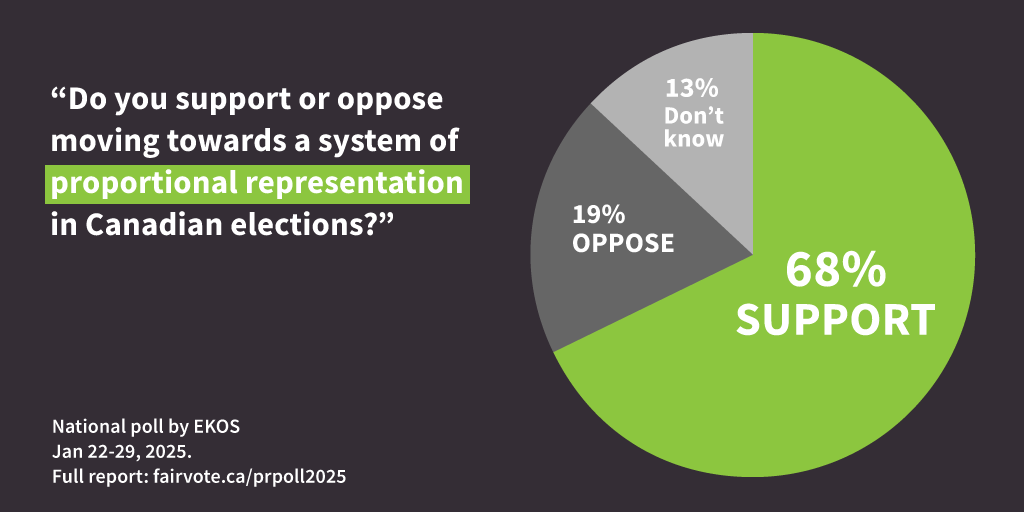
A February 2025 EKOS poll showed that 68% of Canadians support the principle of proportional representation.
Municipally, Kayabaga has championed winner-take-all ranked ballots for local elections in the City of London.
Dave Meslin, leader of Unlock Democracy and an advocate for municipal ranked ballots in Canada, has clearly stated time and again that a winner-take-all ranked ballot system is not the solution for the federal and provincial elections:
“Eleven days ago we witnessed the terribly distorted results of Ontario’s First-Past-the-Post election which delivered a fake majority to the Conservative Party. To be clear, a strong majority of Ontarians voted for change―not for the status quo. But that’s what happens with our broken system: distorted results and wrong winners. That’s why we strongly support proportional representation for all of Canada’s provincial and federal elections.”
– Dave Meslin, Unlock Democracy
Used on a federal or provincial level, experts have shown that a winner-take-all ranked ballot disproportionately benefits the Liberal party, replicates the major problems of first-past-the-post, and can deliver even more distorted electoral outcomes.
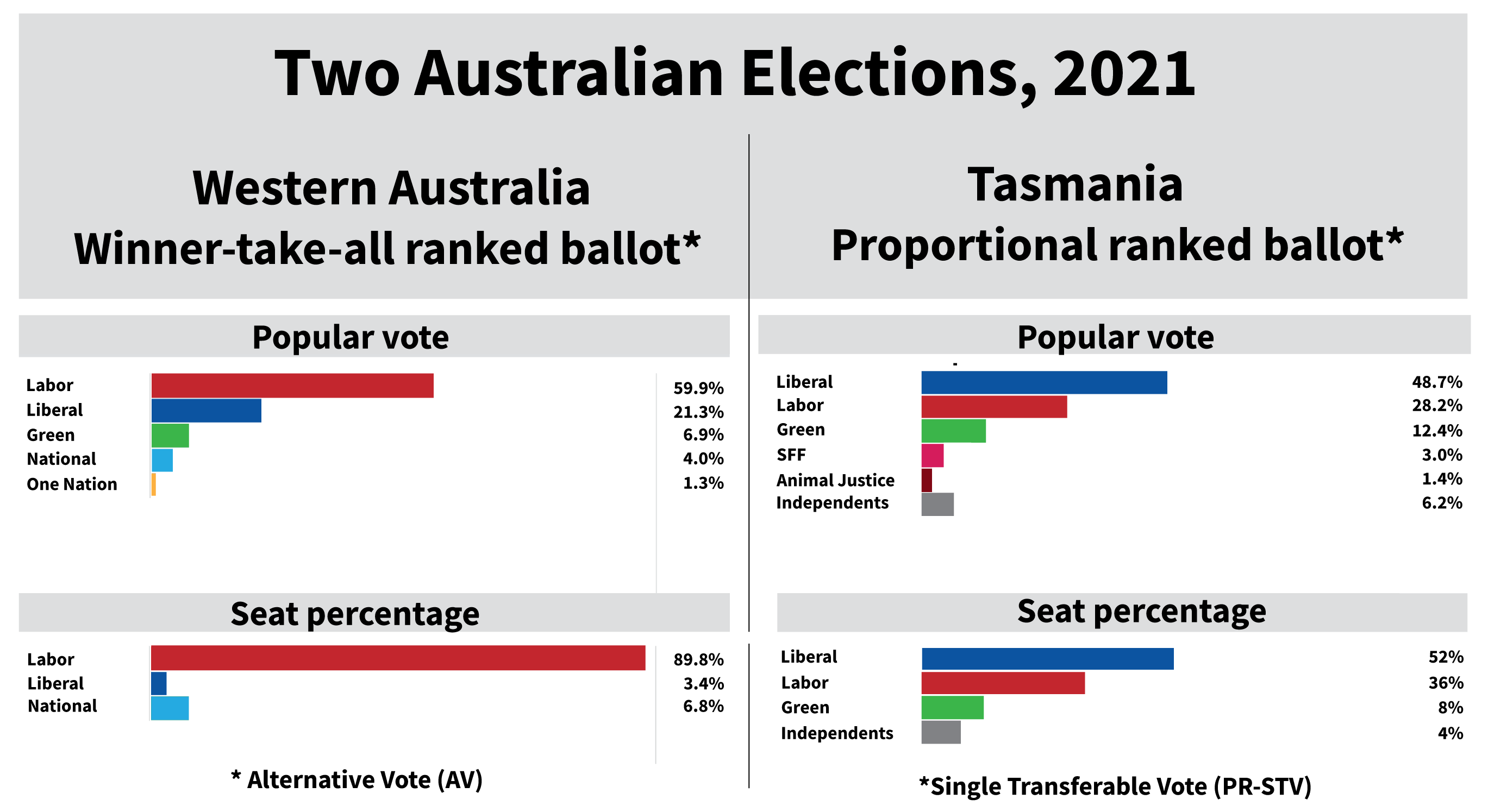
The problems of a winner-take-all voting system cannot be solved with another winner-take-all voting system.
During the federal electoral reform committee, 88% of the experts supported proportional representation. Notably, ranked ballots can also be used within some of the strong proportional representation systems that have been recommended for Canada―a compromise that might satisfy the differing demands of various parties.
The major organizations in Canada’s electoral reform movement are firmly united behind proportional representation for our federal Parliament.
Proportional representation is not one system, but a PRINCIPLE: the number of seats a party gets in Parliament should roughly match its share of the popular vote.
There are several strong options for Canada, all of which would enhance voter choice and local representation, and most importantly, deliver fair overall results.
Whether you live in a rural riding in Atlantic Canada, or in downtown Toronto, or in Red Deer, Alberta, your vote should count. This is essential for Canadian unity. Only a system based on proportional representation can deliver this.
About 80% of OECD countries use systems based on the principle of proportional representation. Each one has customized their system according to the specific needs of their country.
Polling also shows that Canadians strongly oppose any single party (or leader) unilaterally deciding the electoral system.
Determining the right proportional representation system is almost always achieved by a multi-party agreement―meaning negotiation and compromise by two or more parties that represent a true majority of voters.
A National Citizens’ Assembly on Electoral Reform to recommend the specific kind of proportional system that would best suit Canada could be extremely useful to give informed citizens a voice in the process of negotiating positive change.
It’s time to build a strong, resilient, and inclusive democracy
While dealing with Donald Trump and tariffs will understandably be the major focus of the Liberal leader’s messaging going into the next election, committing to progress towards a more proportional system has never been more important.
Authoritarianism is on the rise. The far right is gaining strength. Winner-take-all voting, which deprives millions of Canadians of an effective voice and produces wildly disproportional outcomes, has dire consequences.
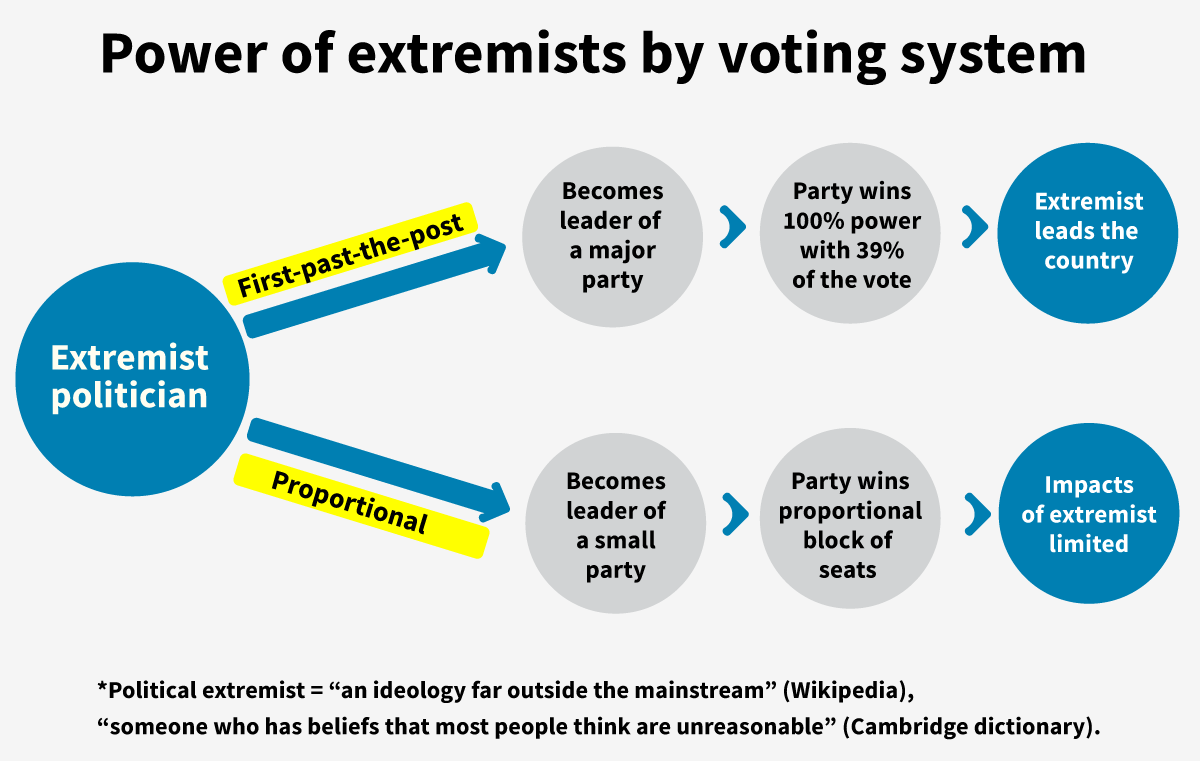
We are witnessing, in real time, the dangers of a winner-take-all system where a big tent party can be captured by an extremist. In Canada, such a party could get a majority government with 39% of the vote.
Only a system based on proportional representation can protect Canadians from such an outcome.
At the same time, countries with proportional representation like Germany, Ireland and Denmark are showing us how strong, stable, and cooperative governments can build resilience to meet the challenges ahead.
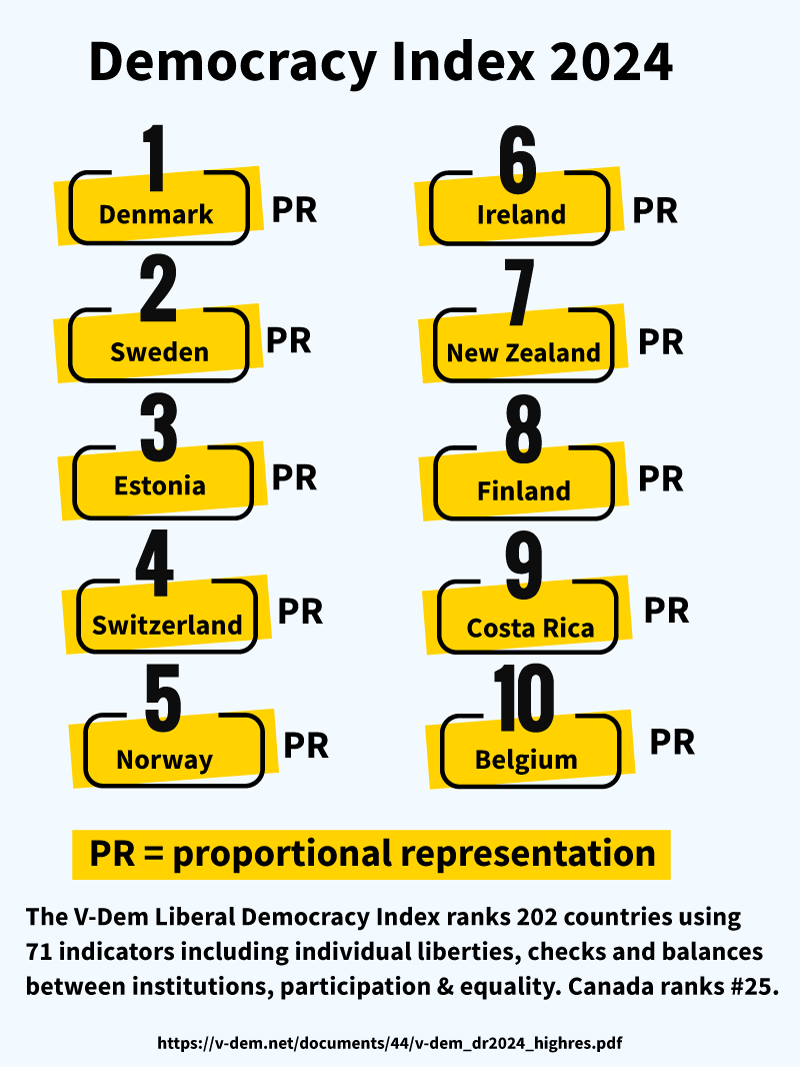
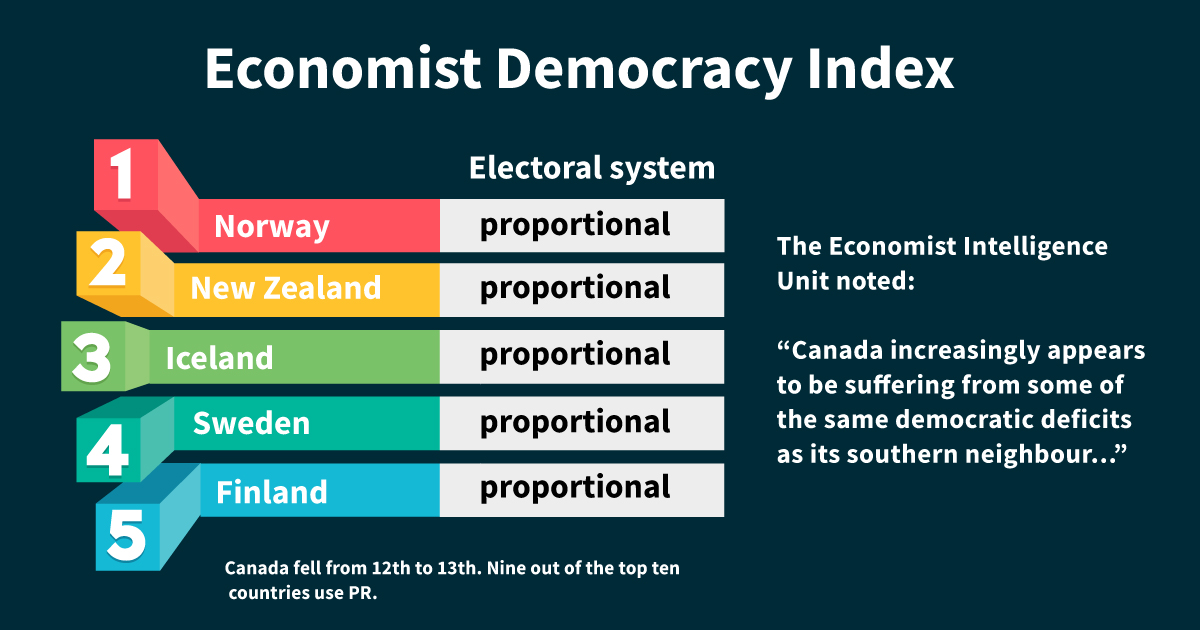
Democracies that use proportional representation are less polarized. The top ten democracies on the V-Dem Democracy Index all use PR. Countries with proportional representation have been proven to have higher economic growth.
Mark Carney represents a clear break from the past with Justin Trudeau on electoral reform. It’s a chance for principled and courageous leadership. The appointment of Arielle Kayabaga is a step in the right direction.
Mark Carney has said: “Let’s build the strongest economy in the G7.”
Let’s build the strongest democracy in the OECD, too.