
Fair Vote Canada applauds efforts to ensure Parliament continues to meet online – urges greater collaboration
The need for a strong, representative democracy does not take a break during a pandemic. At a time when government decisions could ripple through the coming generations, it’s more important than ever that Canadians of all political stripes feel represented by the MPs making those decisions.
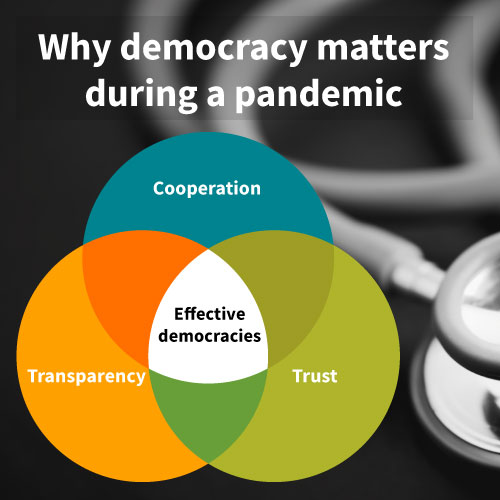 Canadians elected a minority government, supported by only 33% of voters. At a minimum, our Parliament must meet and deliberate online so that our representatives can do the work they were elected to do — and prevent decision-making from migrating into one party’s backroom.
Comparative research suggests that political cooperation leads to better quality decision-making, which is why Fair Vote Canada is calling on all party leaders to step up cooperation during COVID-19.
“Canadians want politicians to put aside partisan point-scoring, leadership ambitions, and party fundraising objectives in order to really work together to ensure that we are getting the best COVID-19 policy their collective wisdom can come up with,” says Fair Vote Canada ED Anita Nickerson.
Nickerson notes that PEI’s minority government, where all party leaders are now in cabinet working groups, is putting voters before politics. “On the other hand, Jason Kenney is taking the opposite approach — unilateral decision-making.”
As Doug Saunders pointed out in the Globe and Mail, research shows that democracies fare better at lowering mortality rates than authoritarian states. Their responses to the pandemic tend to build “public trust and cooperation, using transparency, compromise and other democratic values.”
Saunders could have gone even further: research shows that there are well-established differences between democracies, too. Countries using proportional representation — where cooperation, collaboration and trust between parties is a norm –– do even better at reducing early deaths than those using winner-take-all systems.
More cooperation between political leaders is what Canadians asked for during the last election. At a time like this, they deserve to get it.
Research notes
Details on www.fairvote.ca/health
Upcoming book by Professor James McGuire, Democracy and Population Health, reviewing 200 studies and finding proportional representation a key factor in reducing early deaths.
Patterson, A. (2017). Not all built the same? A comparative study of electoral systems and population health. Health and Place 47: 90-96. Llooking at 179 countries with different types of democratic or autocratic regimes between 1975 and 2012 and found that countries with proportional systems most reliably outperformed other countries with regard to population health, including lower mortality rates.
Gathmann, Christina (2019). Proportional Representation, Political Responsiveness and Child Mortality. IZA Discussion Paper No. 12729. Available at SSRN: https://ssrn.com/abstract=3483967 Uses a unique time-series database from Switzerland, where, between 1890 and 1950, eighteen of Switzerland’s twenty-five cantons switched to proportional representation in a staggered way. She estimates that the electoral reform contributed between 11 and 17 percent to the observed decline in mortality during this period.