
Guest blog by Emerson Howitt
Why a Right-Leaning Government in New Zealand Built Bike Lanes—and Ontario Plans to Tear Them Down
In 2014, New Zealand’s centre-right government made history by announcing a $100 million investment in urban bike infrastructure through its Urban Cycleways Programme. A year later, the programme grew to $333 million, delivering the single largest cycling investment in the country’s history. The move wasn’t just about supporting active transportation—it was a political necessity under the country’s proportional representation (PR) system, where even right-leaning governments must appeal to urban voters.
Having lived in Auckland before moving to Toronto in 2018, I experienced firsthand how New Zealand’s investments in bike lanes transformed daily life. In Auckland, the bike lanes were an essential part of my commute, providing a safe and efficient way to navigate the city. When I moved to Toronto, I was delighted to find an expanding network of bike lanes here, enabling me to continue using my bike as my primary form of transportation.
Now, however, these lanes are under threat from Ontario’s Ford government, which plans to tear them down at significant financial and social cost.
Proportional Representation and Urban Inclusivity
In New Zealand, the PR system ensures that every vote counts and that no party can govern alone. This dynamic forces even the largest parties to work with smaller ones, fostering policies that appeal to a broad cross-section of society—including urban residents like me, who rely on biking infrastructure.
The National Party’s 2014 cycling policy wasn’t about ideology but necessity. They recognized that biking reduces congestion, improves public health, and boosts local economies. Their $100 million plan focused on:
- Building safer, more connected biking networks to encourage more people to bike.
- Reducing barriers, such as safety concerns, that prevent many from biking.
- Creating infrastructure for everyone, from kids to seniors, using the “8 to 80 rule.”
These policies were shaped by the need to satisfy urban voters, a constituency that PR ensures no party can ignore.
Ontario’s FPTP System Undermines Urban Needs
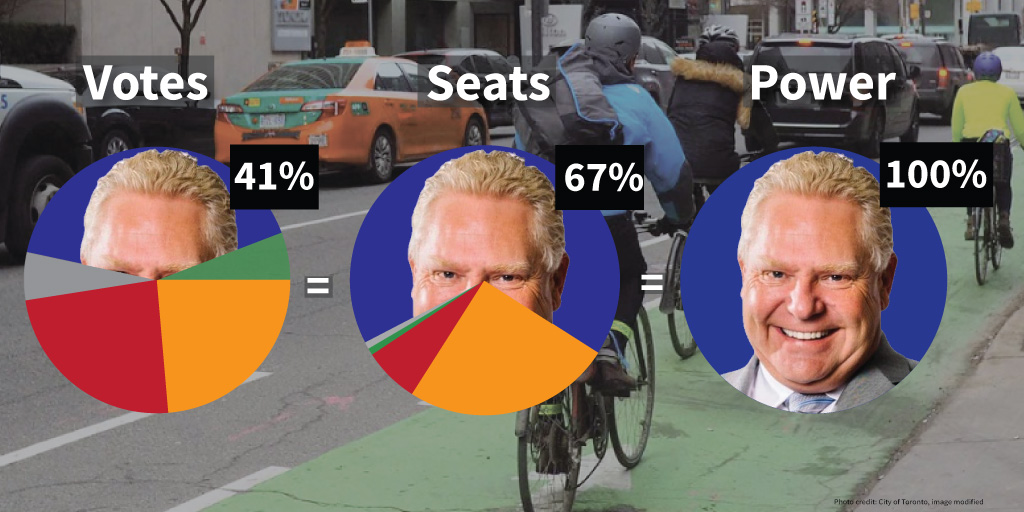
In contrast, Ontario’s first-past-the-post (FPTP) system allows Premier Doug Ford to govern with a majority despite winning only 41% of the popular vote. Since most of the bike lanes on Bloor, Yonge, and University are in safe Liberal or NDP seats, this creates an incentive to focus on swing suburban voters who are far more likely to be against bike lanes while sidelining urban residents whose votes don’t matter to Ford.
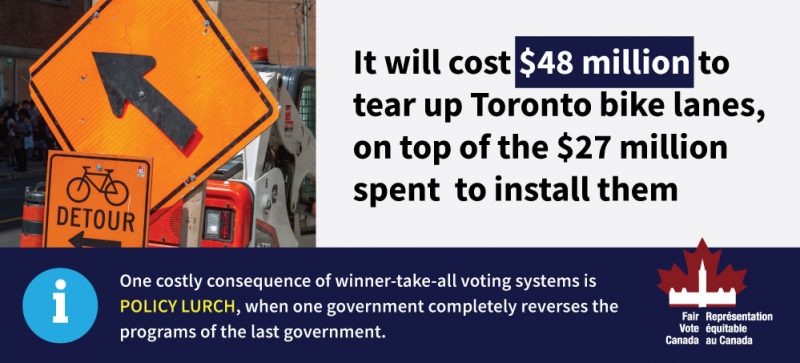
Toronto’s bike lanes—like the ones I use regularly—are now being targeted for removal. A city report estimates that tearing out these bike lanes will:
- Cost $48 million, on top of the $27 million already spent to install them.
- Disrupt traffic for months, increasing congestion during removal.
- Yield only minimal long-term benefits for drivers.
These removals ignore the proven benefits of bike lanes, which include:
- Ridership increases of up to 650% in some areas.
- Safer roads, with bike-car conflicts reduced by 61%.
- Economic boosts for local businesses as more people shop locally.
Despite these successes, Ontario’s FPTP system allows urban voices to be drowned out by suburban priorities and lobbying from groups like Balance on Bloor, whose influence on provincial policy has been well-documented.
PR Encourages Balanced, Evidence-Based Policies
New Zealand’s example shows how PR fosters inclusive governance. Under PR, even right-leaning parties must address urban needs to build coalitions. Bike lanes weren’t just a nod to environmentalists—they were a recognition of the broad benefits biking infrastructure provides to cities.
If Ontario operated under PR, policies like bike lane removal would face greater scrutiny. No government could afford to ignore the data or urban voices when making such significant decisions.
A Call for Change
As someone who has relied on biking infrastructure in both Auckland and Toronto, I’ve seen how bike lanes can transform cities. They create safer, more accessible streets, improve quality of life, and build a healthier future.
But under FPTP, these benefits are at risk of being sacrificed for short-term political gains. Proportional representation offers a better path forward—one where every voice matters, and every community benefits from balanced, evidence-based policies.
It’s time for Ontario to embrace electoral reform and build a democracy that works for everyone.
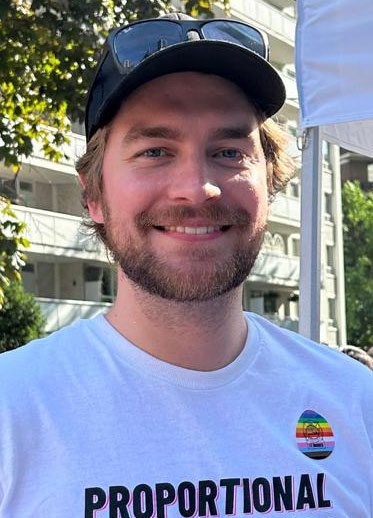
Originally from New Zealand, Emerson never thought much about electoral systems. It wasn’t until he moved to Toronto that he noticed the stark differences in Canadian politics compared to his home country. He has a background in journalism and communications with a strong interest in urban issues such as transit, housing, and more pedestrian and cycle-friendly cities. Emerson believes the best way to achieve proportional representation is getting more Canadians to connect the dots between first past the post and the problems impacting our country today.